- All
- Product Name
- Product Keyword
- Product Model
- Product Summary
- Product Description
- Multi Field Search

Views: 220 Author: snkidsunderwear Publish Time: 2025-10-29 Origin: Site


Content Menu
● Material selection and specification
● Safety and regulatory compliance
● Production controls and process quality
● Quality testing and assurance
● Packaging integrity and labeling
● Sustainability and ethical sourcing
● Quality management systems and continuous improvement
● Supplier collaboration and audits
● Quality assurance across the product lifecycle
● Customer-focused quality and aftersales support
● The role of digital technologies
● Practical best practices for brands
● Common quality challenges and how to address them
● Summary of qualities that distinguish top manufacturers
● FQAS
In today's apparel industry, ensuring quality in children's underwear sets is both a moral obligation and a practical business strategy. Leading manufacturers recognize that parents seek comfort, safety, and durability for their children, while retailers rely on consistency and trust to build long-term relationships. This article examines the comprehensive quality frameworks employed by industry leaders to deliver reliable boy underwear sets, from material selection to post-sale support. We will explore the crucial stages of product development, manufacturing controls, testing regimes, and continuous improvement practices that together create a reliable, high-quality product.
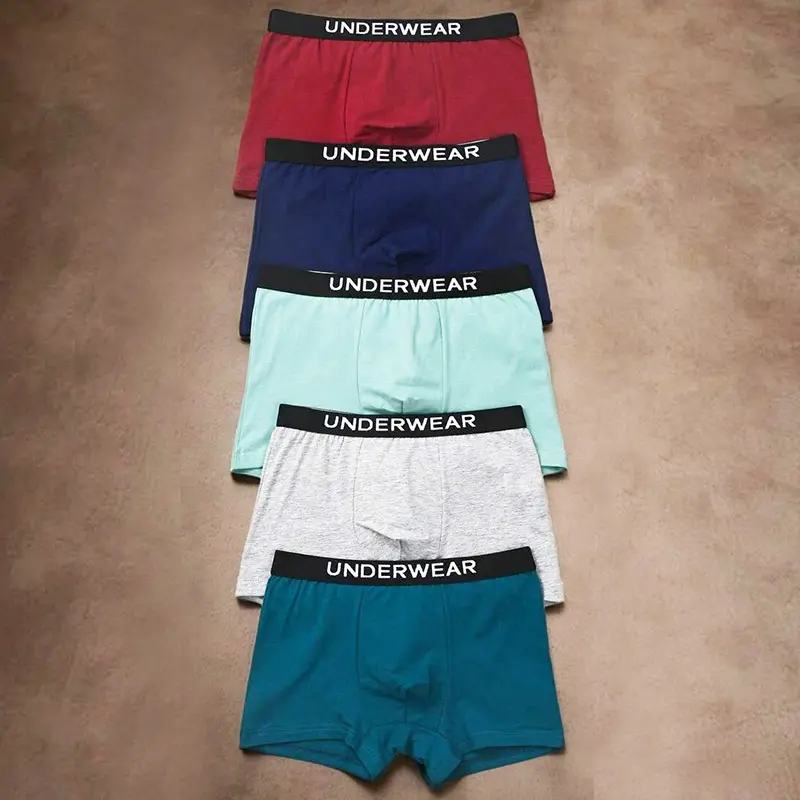
Quality begins with the right materials. Leading manufacturers define clear material specifications that address comfort, fit, breathability, and safety. Natural fibers such as cotton blends are often chosen for their softness and moisture-wicking properties, while synthetic fibers may be used to enhance stretch and durability. Critical considerations include fiber content limits, fiber cleanliness, colorfastness, and compliance with child-safety standards. By collaborating with reputable fabric mills, top brands ensure traceability and consistent performance across production lots.
Ergonomic design is essential in boy underwear sets. Designers prioritize a soft waistband, seamless or flat-locked seams, and ergonomic fly construction where appropriate. Size ranges are developed based on demographic data and measured customer feedback to minimize shrinkage and improve comfort. Prototyping and fit testing with real children, under parental supervision and with informed consent, help validate sizing charts and garment construction before mass production.
Safety is non-negotiable in children's apparel. Leading manufacturers align with local and international standards for flammability, labeling, and restricted substances. They implement restricted substance lists (RSLs) to screen materials for harmful chemicals and maintain documentation for regulatory audits. Clear care instructions and age-appropriate labeling support consumer safety, while supplier audits help safeguard the integrity of the entire supply chain.
Color consistency and print durability are critical for consumer satisfaction. Manufacturers establish color standards, supplier color lots, and controlled dyeing processes to minimize shade variation between batches. Print methods are chosen to withstand repeated washing without cracking or fading. Color management systems are used to monitor and adjust parameters across production runs, ensuring a uniform appearance in every set.
A robust production control plan is foundational to quality. Leading manufacturers implement:
- Standard operating procedures for every operation, from cutting to sewing to finishing.
- In-process quality checks at key milestones to catch defects early.
- Operator training programs to ensure consistent technique and accuracy.
- Equipment maintenance schedules to minimize downtime and maintain precision.
- Lot tracking and traceability to identify the origin of any issue quickly.
These practices reduce scrap, improve yield, and ensure that each underwear set meets predefined quality criteria before packaging.
Quality assurance extends beyond visible inspection. Comprehensive testing protocols often include:
- Fabric performance tests such as tensile strength, elongation, and abrasion resistance.
- Colorfastness tests under repeated washing and exposure to light.
- Dimensional stability checks to verify shrinkage and stretch behavior.
- Stitch integrity assessments, including seam strength and seam slippage.
- Safety tests for fasteners, trims, and elastic components to prevent skin irritation or choking hazards.
Results guide acceptance decisions and feed back into material selection and design improvements.
Packaging serves as the first quality touchpoint for consumers. High-performing brands use packaging that protects the product during transit and storage while conveying important information clearly. Labeling must be accurate and compliant, providing size, care instructions, fabric content, and safety notices. Tamper-evident features and tamper-resistance measures may be employed where appropriate to reassure customers.
Quality today encompasses social and environmental responsibility. Leading manufacturers audit their supply chains to ensure fair labor practices, safe working conditions, and environmentally responsible operations. They may pursue certifications, reduce water usage, and optimize waste management. Transparent communication about sustainability initiatives enhances consumer trust and brand reputation.
A formal quality management system (QMS) provides the framework for ongoing improvement. Key components include:
- Documented quality policies and objectives aligned with business goals.
- Regular internal audits to verify compliance and identify improvement opportunities.
- Corrective and preventive actions (CAPA) to address root causes of defects.
- Data-driven decision making, using metrics such as defect rates, return rates, and on-time delivery performance.
- Employee empowerment to report quality issues without fear of reprisal.
Through a culture of continuous improvement, manufacturers reduce variability and elevate overall product quality across seasons.
Strong supplier relationships contribute significantly to quality. Leading manufacturers conduct regular supplier audits, require corrective action plans, and establish clear expectations for material quality, delivery, and ethical standards. Collaborative problem solving and shared quality objectives help sustain consistent product performance from raw materials to finished sets.
Quality is not a one-off checkpoint but a lifecycle discipline. Key lifecycle stages include:
- Concept and design validation to ensure feasibility and safety.
- Material and component qualification to confirm suitability.
- Pilot production to verify process capability and product performance.
- Full-scale production with ongoing QA checks and sampling plans.
- Post-market monitoring for customer feedback and defect analytics to drive improvements.
This lifecycle approach helps ensure that boy underwear sets remain reliable from the first batch to the latest release.
End-user feedback is a powerful driver of quality. Leading brands implement accessible channels for customers to report issues, request replacements, and receive guidance on care. An effective aftersales program helps maintain customer trust and provides valuable data for future product iterations. Clear warranty terms and responsive service are essential components of this ongoing relationship.
Digital tools enhance precision and traceability. Manufacturers leverage:
- Computer-aided design (CAD) and virtual prototyping to optimize fit and aesthetics.
- Digital pattern making that reduces fabric waste and improves accuracy.
- Manufacturing execution systems (MES) for real-time production monitoring.
- Internet of Things (IoT) sensors to track equipment performance and maintenance needs.
- Data analytics to identify defects, predict failures, and guide preventive actions.
These technologies streamline operations while elevating quality control.
- Define explicit product specifications with measurable criteria for fabric, construction, and finish.
- Implement a staged inspection plan that includes raw material checks, in-process controls, and final audits.
- Establish a robust CAPA process to address root causes of defects and prevent recurrence.
- Invest in employee training focused on quality consciousness and practical skills.
- Foster open communication with suppliers and customers to align quality expectations.
- Shrinkage and fit variation: Use pre-shrunk fabrics, reliable elastics, and precise cut plans; validate with multi-size testing.
- Pilling and surface wear: Select high-quality blends and employ appropriate finishing processes; use end-of-life testing to simulate long-term wear.
- Color fading: Optimize dye chemistry and washing protocols; provide clear care instructions to customers.
- Elastic degradation: Choose durable elastics with proven stretch-recovery characteristics; conduct aging tests.
Leaders mitigate these challenges through proactive material validation, rigorous process controls, and a customer-centric approach to quality.
- Rigorous material specifications and supplier management.
- Design emphasis on comfort, fit, and safety.
- Comprehensive safety, labeling, and regulatory compliance.
- Robust production controls, testing, and inspection regimes.
- Active post-market feedback loops and continuous improvement.
By integrating these elements, leading manufacturers deliver boy underwear sets that meet high standards of comfort, safety, and durability, while maintaining efficiency and competitiveness in a demanding market.
Q1: What materials are most suitable for boy underwear sets to balance comfort and durability?
A1: Cotton blends with a touch of elastane are common for softness and stretch, providing comfortable wear and shape retention.
Q2: How do manufacturers ensure sizing accuracy across batches?
A2: They rely on data-driven sizing charts, prototyping with fit testing, and strict cutting patterns to minimize variation between production lots.
Q3: What safety standards should be considered for children's underwear?
A3: Compliance with local and international safety standards, restricted substances lists, proper labeling, and age-appropriate design protections are essential.
Q4: How can colorfastness be maintained after multiple washes?
A4: Use controlled dyeing processes, stable color chemistries, and provide clear care instructions to customers to preserve color quality.
Q5: What role does post-sale feedback play in quality management?
A5: It informs product improvements, identifies recurring issues, and helps refine future designs and manufacturing processes.
Q6: How can brands reduce fabric waste during production?
A6: Implement digital pattern optimization, efficient nesting, and lean manufacturing practices to minimize offcuts and waste.
Q7: Are sustainable practices compatible with high quality in underwear sets?
A7: Yes; sustainable sourcing and responsible production can coexist with quality through careful material selection, ethical audits, and transparent reporting.
Hot Tags: China, Global, OEM, private label, manufacturers, factory, suppliers, manufacturing company


